
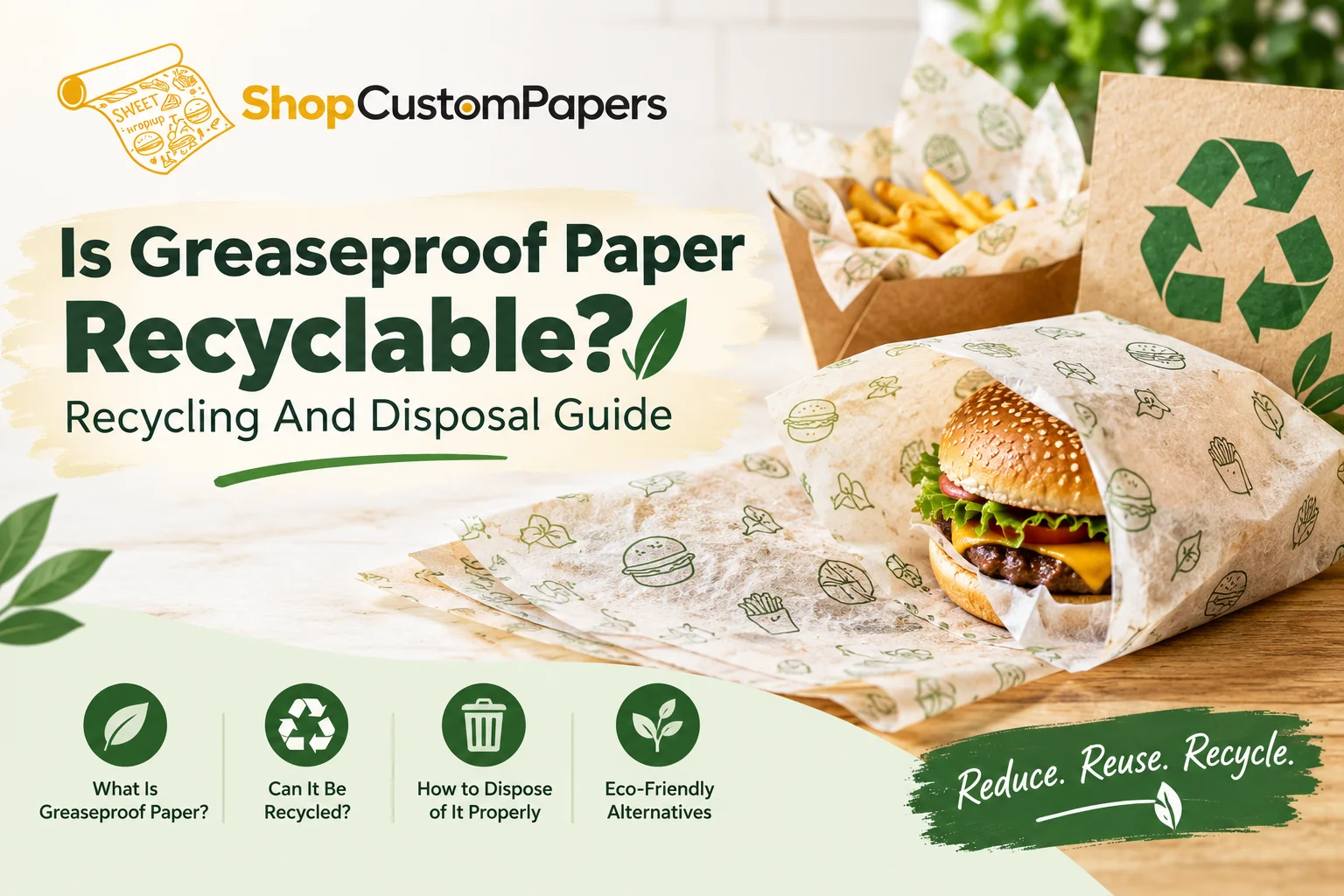
Greaseproof paper is a staple in UK kitchens, bakeries, chippies and cafés. It wraps sandwiches, lines baking trays and keeps fish and chips from soaking through. But once it has done its job, many people stop and wonder: can I put this in the recycling bin?
The honest answer is: it depends. In this guide, we explain what greaseproof paper is, when it can be recycled, when it can’t, and the best ways to dispose of it. We’ll also share tips for businesses choosing more sustainable greaseproof paper.
What Is Greaseproof Paper?
Greaseproof paper is a paper that resists oil and grease. Unlike plastic-coated papers, traditional greaseproof paper gets its resistance from the way it’s made. The paper pulp is beaten for longer, which creates a dense, tightly packed sheet that grease struggles to pass through.
This makes it a popular choice for:
- Wrapping sandwiches, burgers, pastries and deli items
- Lining cake tins and baking trays
- Food-safe packaging for bakeries, takeaways and delis
- Custom branded wraps and liners
It’s easy to confuse with similar products, so here’s how they differ:
- Greaseproof paper: Paper-based, resists grease through its density. Often uncoated.
- Baking parchment: Usually coated with silicone to make it non-stick and heat resistant.
- Wax paper: Coated with wax, which is not suitable for oven use.
- Foil: Metal, recycled in a completely different way.
This difference matters, because the coating on a paper product is the biggest factor in whether it can be recycled.
So, Is Greaseproof Paper Recyclable?
In principle, plain, uncoated greaseproof paper is made from wood pulp and is a paper product, so it is technically recyclable. In practice, the answer is less simple, for three reasons.
1. Grease and food contamination
Recycling relies on paper fibres being broken down in water and re-formed into new paper. Oil and grease don’t mix with water, and they interfere with that process. Paper that’s heavily soaked in grease or covered in food waste can spoil an entire batch of recycling, which is why most councils ask you to keep it out.
2. Coatings and treatments
Some greaseproof papers, and almost all baking parchment, have a silicone or other coating. Coated papers generally can’t be processed in standard UK paper recycling and should not go in your household recycling bin.
3. Local council rules
In the UK, recycling is collected by local councils, and the rules vary from area to area. One council may accept clean paper of any kind, while another may specifically exclude greaseproof paper and baking parchment. Always check before you bin it.
When Can Greaseproof Paper Be Recycled?
Greaseproof paper has the best chance of being recycled when it is:
- Clean and dry, with no visible grease, oil or food residue
- Uncoated, with no silicone, wax or plastic layer
- Accepted by your local council, as confirmed on their website
A sheet that wrapped a dry bread roll, for example, is far more likely to be accepted than one that held a greasy burger.
When Should You Not Recycle It?
Keep greaseproof paper out of your recycling bin if it is:
- Stained with oil, butter, grease or sauce
- Covered in food crumbs or residue
- Coated with silicone, wax or plastic
- Your council’s guidance says it isn’t accepted
As a rule of thumb, when in doubt, leave it out. Putting the wrong item in recycling can contaminate otherwise good material and cause whole loads to be rejected.
How to Dispose of Greaseproof Paper Responsibly
Check your local council
The quickest way to get a clear answer is to look up your postcode on your council’s website or use the national Recycle Now locator, which shows what your local service accepts.
Use your food waste caddy (if allowed)
Some councils accept soiled, uncoated paper in food waste collections. This can be a good option for greasy greaseproof paper, but rules vary, so confirm with your council first. Never put coated or silicone-treated paper in food waste.
Compost it at home
Plain, uncoated and unbleached greaseproof paper can often be composted at home in small pieces. Tear or shred it first to help it break down, and avoid anything with a coating or printed with heavy inks. If you’re unsure of the paper’s composition, don’t compost it.
Put it in general waste
If the paper is greasy, coated or you’re unsure, the general waste bin is the safest option. It isn’t the greenest outcome, but it protects the rest of your recycling from contamination.
Reuse it first
The most sustainable disposal is not disposing of it at all. Clean sheets of greaseproof paper can often be reused for lining trays or wrapping non-greasy items before you throw them away.
Tips for Businesses: Choosing More Sustainable Greaseproof Paper
If you run a café, bakery, takeaway or food business, the paper you choose affects how easy it is for your customers to dispose of it responsibly. Here’s what to look for:
- Uncoated or plastic-free options: Papers without silicone, wax or plastic layers are easier to recycle or compost.
- FSC-certified paper: This shows the wood fibres come from responsibly managed forests.
- Water-based or plant-based inks: If you’re printing a custom design, these are kinder to the environment and better for recycling.
- Food-safe certification: Make sure the paper is safe for direct food contact.
- Clear disposal messaging: Add a simple line to your packaging, such as “Please check local recycling guidelines”, to help customers dispose of it correctly.
Custom printed greaseproof paper is a great way to build your brand while showing customers you care about the planet. Choosing the right materials from the start means less waste and a better experience for everyone.
Frequently Asked Questions
Can I put greaseproof paper in my recycling bin in the UK?
Only if it’s clean, uncoated and your local council accepts it. Greasy, food-stained or coated paper should not go in recycling.
Is greaseproof paper the same as baking parchment?
No. Baking parchment is usually coated with silicone, which makes it non-stick and heat resistant but harder to recycle. Greaseproof paper is often uncoated, though some types do have a coating.
Is greaseproof paper biodegradable?
Uncoated greaseproof paper is made from plant fibres and will break down naturally. Coated versions may not, and can leave residues behind.
Can greaseproof paper go in the food waste bin?
Some UK councils allow soiled, uncoated paper in food waste caddies, while others do not. Check your local guidance.
Can I compost greaseproof paper at home?
Plain, uncoated and unbleached greaseproof paper can often be home composted when torn into small pieces. Avoid coated or heavily printed paper.
Is wax paper recyclable?
Wax paper is generally not recyclable in household collections because of its wax coating.
The Bottom Line
Greaseproof paper can be recyclable, but only when it’s clean, uncoated and accepted by your local council. If it’s greasy, food-stained or coated, it’s best placed in food waste (where permitted), home compost (if uncoated), or general waste.
The simplest way to make a difference? Choose responsibly made, uncoated, FSC-certified greaseproof paper in the first place, and always check your local rules before you bin it.
Looking for high-quality, food-safe greaseproof paper for your business? Explore our range of custom printed greaseproof paper at Shop Custom Papers UK and create packaging that looks great and is kinder to the planet.